Many failing drain fields aren't dead — they're biologically clogged. Get an honest assessment before you commit to anything.
Get Your Free Assessment — No ObligationCertified Pirana® Specialists — 10,000+ Systems Restored Across North America Without Excavation

Scott Horan
General Manager, SeptiCure
If something feels off with your septic system — and you're not sure yet how serious it is — this is worth reading before you call anyone.
Maybe it's a smell you can't quite locate. Drains that are slower than they used to be. A soggy patch in the yard that wasn't there last spring. Nothing catastrophic yet — but enough to know something is happening underground.
So you start researching. And pretty quickly, the numbers you find are alarming. And if you've already had a contractor out, you may already be staring at a quote that made your stomach drop.
Here's what almost nobody tells you before that decision gets made.
Most septic companies are replacement-first because excavation, repair, and replacement are what they're set up to provide. SeptiCure is restoration-first: we start by asking whether the field is structurally failed or biologically clogged. From the surface, those two conditions look identical. Underground, they need completely different solutions — one needs replacing, the other needs restoring.
What they're not checking for is biomat — a thick biological layer that builds up and seals your drain field soil shut from the inside. If the field structure is still intact beneath it, you don't need excavation. You need biological restoration. That's precisely what SeptiCure is built to assess — and it's the difference between a five-figure bill and a system that works again.
I believe in this technology enough that I run it on my own property here in Northern Alberta. Not because I had to — because after seeing what it does in the field, I wouldn't have it any other way.
We will not tell you every system qualifies. Some don't. But before you tear up your yard or commit to a five-figure replacement quote, it's worth a conversation to find out whether yours can be restored instead.
It's worth getting a second opinion if:
Most failures look sudden — but underground, the problem has usually been quietly building for years.
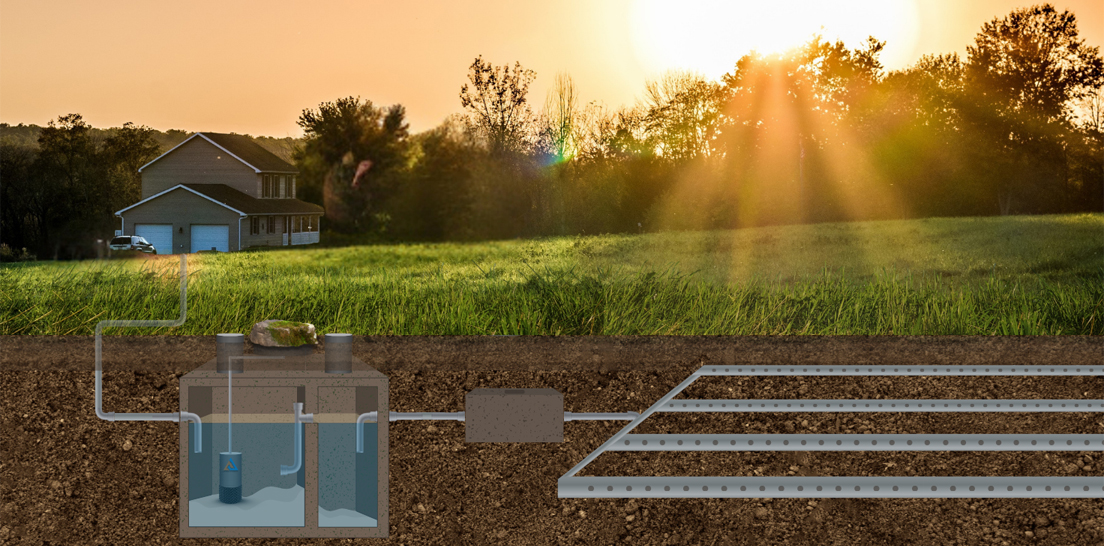
A septic system isn't just a tank. It's a three-stage filter:

When biomat builds up at the soil interface — that third filter — it slowly seals shut. Water can't absorb properly. The system starts to act like it has failed.
Here's the part that matters: biomat doesn't show up overnight. It accumulates gradually — sometimes over years — before the visible symptoms finally appear.

By the time visible symptoms appear, the biomat has typically been building underground for years. Which means the field structure itself is often still completely intact. And an intact structure doesn't need to be replaced — it needs the biomat cleared from the soil surface so water can absorb freely again. That's precisely what biological restoration does.

Because the symptoms of biomat failure and structural failure are identical on the surface.
Most septic companies see a failing field and reach for the solution their business is set up to deliver: excavation and replacement.
What they're not looking for — and often not trained to identify — is whether the failure is biological or structural.
That distinction is everything.
Structurally failed? Broken pipes, collapsed trenches? Replacement is the right answer.
Biologically clogged? Structure intact underneath? You don't need replacement. You need restoration.
That's what the assessment is designed to determine.
Biomat is a dense biological layer that builds up at the soil interface of your drain field — the exact point where treated wastewater is supposed to absorb into the ground.
Every time wastewater passes through your system, microscopic organic particles accumulate on the soil surface beneath your leach lines. Underground, without oxygen, only weak anaerobic bacteria survive — bacteria that can barely process incoming waste, let alone break down the layer building up below them.
Over years, that layer thickens. Eventually it seals the soil completely. Water can't absorb. The system starts behaving as if it's failed.
But here's the critical part: biomat doesn't appear overnight.
It accumulates gradually — sometimes over a decade or more — before visible symptoms show up on the surface. Which means by the time you notice slow drains or wet spots in the yard, the field structure has often been intact underneath the entire time.
The field isn't dead. It's clogged. And clogged is a completely different problem from broken.
Biomat is responsible for the vast majority of drain field failures. Which is exactly why most replacement quotes get written without anyone checking whether the underlying field structure is actually compromised.

Your drain field operates without oxygen. In that anaerobic environment, only weak bacteria survive — bacteria that can process some incoming waste but can't touch the biomat layer that's been sealing your soil shut.
The field isn't broken. It's oxygen-starved.
Introduce a continuous oxygen supply and everything changes. Aerobic bacteria — the kind that actively digest organic matter — can now survive underground, colonize the soil surface, and go to work on the biomat.
That's the entire principle behind SeptiCure. Not chemicals. Not additives. Oxygen — and the right bacteria to put it to work.
Here's exactly what installation looks like:
A compact 40-watt air pump installs above ground.
Discreet, positioned next to your existing septic tank's service riser. No excavation. Most installs complete in a single day.
An aerobic bacteria generation unit is installed inside your existing septic tank.
A thin air line runs down through the service riser to a submerged unit inside the tank. Oxygen circulates through the effluent, turning the tank into a continuously aerated environment — without needing to dig anything up.
Pirana® Blend Bacteria multiply in the aerated tank.
This proprietary bacterial colony — developed specifically for septic remediation by bioremediation scientist Jerry Fife in 1995 — thrives in the oxygen-rich tank, then flows with the effluent through the perforated pipes into your drain field, where it colonizes the soil surface and digests the biomat sealing it shut.
The pump runs 24 hours a day, 7 days a week.
Unlike one-time additives that flush through and disappear, SeptiCure continuously generates fresh aerobic bacteria in the tank and delivers them to the field. The bacteria keep working. The biomat keeps breaking down.
Most homeowners notice early changes within days to weeks — odours dropping, drains flowing better, liquid levels in the tank falling. Full restoration continues over the following months.

Pirana® technology was invented by Jerry Fife, a bioremediation specialist, in 1995.
Fife spent years in large-scale environmental remediation — the science used to clean contaminated soil and groundwater after industrial spills. He applied those same biological principles to failing septic systems.
SeptiCure is the certified Pirana® installation specialist for Northern Alberta — trained directly in the technology and responsible for every local assessment and installation.
This isn't a new idea being tested out. It's three decades of proven science applied to your drain field.
1995
Year Pirana® technology was invented
25 yrs
Commercial deployment track record
14
Countries where Pirana is deployed
10,000+
Drain fields restored globally
Here's what property owners say after restoration:
"We were told our commercial septic system had failed and that excavation was inevitable — the leaching field was located beneath a paved parking area. After installing this system, the field recovered fully and has continued to function properly for more than eight years. It saved us tens of thousands of dollars and avoided significant disruption to our tenants."
Andrew A. · Commercial Property Owner, 8+ Years Post-Install
Saved tens of thousands
"We are on an older property — 1979 — and still running the same system. Since installing in May, we have no more smell in the house or outside. 100% recommend this system to anyone."
Catelin B. · Acreage Owner, 1979 System
Aging-system rescue
"We installed the system over twenty years ago and continue to be extremely satisfied. The leach field was restored without replacement. It's hard to understand why every homeowner would not consider this solution."
Mike H. · 20+ Years Post-Install
Two decades of proof
"Solids were effectively digested, liquid infiltration improved, and pumping was no longer required. The system has continued to perform without intervention since installation."
Roy M. · Verified SeptiCure Customer
Pumping no longer required
Twenty years of documented results from real property owners. Not a sales pitch. A track record.
Because it's not what they do.
A conventional septic contractor is trained in installation and replacement. Biological restoration isn't in their toolkit — most have never been trained in it and have no reason to offer it.
Replacement is also what their business is set up to deliver. A $50,000 excavation fits the model. A restoration referral doesn't.
This pattern exists in every trade. When your only tool is a hammer, everything looks like a nail.
What matters is that this science has been in commercial deployment since 1995. Over 10,000 systems restored across 14 countries. The reason you haven't heard about it isn't because it doesn't work. It's because the contractors you've spoken to aren't equipped to offer it — and aren't incentivized to find out.
You won't know until a trained specialist evaluates it. That's what the free diagnosis is for.
Systems That Typically Qualify
Systems That Typically Don't Qualify
Scott will assess your system and tell you directly whether restoration is the right answer — or whether replacement is genuinely what you need.
Not every system qualifies. But the assessment is free, there's no obligation to proceed, and you leave the call with a straight answer either way.
Most homeowners notice early changes within days to weeks.
Odours typically drop first — often within the first week, as the aerobic environment begins displacing the anaerobic gases causing the smell. Drain flow improves as biomat breaks down and water moves through the soil again. Liquid levels in the tank start to fall.
Full restoration continues over the following months as bacteria progressively clear accumulated biomat from the soil surface.
Timeline depends on how much biomat has built up and how long symptoms have been present. A field with years of heavy accumulation takes longer than one caught early. Your assessment will give you a realistic picture of what to expect for your specific system.
Because the air pump runs 24/7 — not as a one-time treatment — the biological activity that cleared the biomat continues actively protecting the field after restoration is complete.
This is the right question. It deserves a direct answer.
Full replacement doesn't address biomat. It demolishes the old field and installs a new one — which begins accumulating biomat the moment wastewater flows through it. Replace today, and in 10–20 years you may be facing the same problem again.
SeptiCure works differently. The air pump runs 24/7 — not as a one-time treatment. That means aerobic bacteria are continuously working in your drain field, actively digesting incoming organic matter before it can build up into biomat again.
You're not just clearing the clog. You're preventing the next one from forming.
Andrew A.'s commercial system has functioned properly for 8+ years since restoration. Mike H. installed his system more than 20 years ago and is still satisfied today.
Replacement resets the clock. SeptiCure helps stop it.

For a qualified restoration — almost nothing.
The air pump installs above ground, compact and discreet, positioned near the drain field. Aeration lines are placed into the existing system. No full drain-field excavation. No heavy machinery tearing through your property.
Most installs complete in a single day.
This matters more than it sounds. On many Northern Alberta acreages, the drain field sits under landscaping that took a decade or more to establish — mature trees, gardens, fencing, custom hardscaping. Full excavation doesn't just cost $35,000–$100,000 in contractor fees. It can destroy what's built above it.
A restoration that doesn't require excavating your drain field preserves something you can't simply buy back.

No. And this is exactly the right moment to get one.
The quote is on paper. Nothing has been signed. Nothing has been dug.
Here's the thing: a replacement contractor wrote that quote based on your symptoms — not a confirmed diagnosis of what's causing them. In most cases, no one has checked whether the failure is structural or biological. They've seen a failing field and written the one solution they know how to sell.
A second opinion from someone specifically trained to distinguish biomat failure from structural failure costs you nothing. The free assessment takes one conversation.
If Scott confirms replacement is genuinely the right answer, you proceed with more confidence it's actually necessary.
If the failure turns out to be biological — and the field structure is intact — you may have just found out you have options you didn't know existed.
Don't sign anything until you know what you're actually dealing with.
Full drain field replacement in Alberta typically runs $35,000–$100,000. Excavation, materials, contractor labour, and significant disruption to your property.
SeptiCure restoration typically costs under $12,000 for qualified systems.
Exact pricing depends on your field — size, configuration, and access. Scott walks through transparent, itemized pricing during your assessment before you commit to anything. No hidden fees. No pressure to decide on the spot.
The savings aren't incremental. We're talking about the difference between a five-figure excavation project and a fraction of that cost — with no dig, no disruption, and results that often begin within days of installation.
The only question is whether your system qualifies. That's what the free diagnosis determines.
| SeptiCure Restoration | Full Replacement | |
|---|---|---|
| Typical Cost | ✓Under $12,000 | $35,000 – $100,000 |
| Excavation Required | ✓No full drain-field excavation | Extensive |
| Landscape Damage | ✓Minimal disruption | Significant disruption |
| Timeline to Results | ✓Early changes in days to weeks | Months of construction |
| Root Cause Addressed | ✓Treats biomat when biological clogging is the cause | No — resets the clock |
| Regular Pumping | ✓May significantly reduce | Still required |
| Odour Elimination | ✓Designed to reduce odours when biomat is the cause | Dependent on new system |
| Track Record | ✓25 years (Pirana®) | Standard industry approach |
| Property Value at Sale | ✓May provide documentation useful at sale or inspection | Reset to baseline |
Yes. This is entirely natural biology.
Pirana® restoration introduces aerobic bacteria — organisms that naturally break down organic matter — supported by a continuous oxygen supply. No harsh chemicals. No synthetic additives. Nothing that leaches into your soil or groundwater.
This is the same class of biological science used in large-scale environmental remediation — including cleanup of contaminated groundwater after industrial spills. The bacteria digest organic waste and die off naturally.
What's left is cleaner soil and properly filtered water moving through your drain field — exactly what the system was designed to produce from the start.
Natural Biology
Aerobic bacteria, naturally occurring
No Harsh Chemicals
Nothing that leaches into soil
Safe For Groundwater
Same science as environmental cleanup
No Synthetic Additives
Bacteria die off naturally
It won't.
Biomat doesn't reverse itself. It progresses. Slow drains become full backups. Backups become overflows. In Alberta, overflows can trigger municipal inspections, code-compliance timelines, and enforcement deadlines that shrink your options and increase your costs significantly.
The homeowners who get the best outcomes with SeptiCure are the ones who call before the crisis — before the system deteriorates past the point of restoration, and before the only option left is the most expensive one.
The longer biomat accumulates, the longer restoration takes. And once a system crosses past the restoration threshold, what could have been a fraction of the cost may become the full replacement bill.
The free diagnosis takes one conversation. It costs nothing. It obligates you to nothing.
Early is always cheaper.

Your Next Step
Speak directly with a certified Pirana® specialist before you agree to replacement, excavation, or another temporary fix. Here's exactly what you get — at zero cost and zero obligation:
The worst outcome: you leave the call with better information than you had before.
The best outcome: you find out you don't need the quote you've been sitting on.